Mold Claims:
Sarasota Home and Business Owners’ Guide to Coverage and Recovery
Sarasota’s humid climate and frequent storms create a perfect breeding ground for mold, impacting homes from Siesta Key to businesses along Tamiami Trail. Whether it’s a leaky roof in Gulf Gate or a flooded office near Palmer Ranch, mold claims arise when water damage goes unchecked. Insurance coverage for mold is tricky—often limited or excluded—requiring careful navigation. This guide helps Sarasota property owners understand mold claim exclusions, deductibles, and how to frame them as water damage, plus signs, testing, and health risks, with resources to maximize recovery.
10 Secrets to Securing a Rock-Solid Mold Settlement: Beat the Denials and Get Paid Full
Mold isn’t just an ugly spot—it’s airborne, toxic, and a health nightmare that spreads fast through your HVAC, attacking lungs, sinuses, and worse for kids, elderly, or anyone sensitive. In humid Florida like Sarasota, one storm leak turns into a $100K nightmare.
Your insurance hates mold claims—policies cap at $5-10K or exclude outright, calling it “maintenance” or “gradual.” They’ll deny 70%+. But here’s the game-changer: Rephrase “mold” as “water damage from wind-driven rain.” Policies cover unlimited remediation if tied to a sudden storm event (hurricane/wind creates roof gap, rain blasts in). Insurers fold when you prove wind peril first.
Act Day 1 with pro language—max success skyrockets 400%. These 10 battle-tested secrets from adjusters, lawyers, and winners deliver full payouts.
Secret 1: Call It Water Damage—NEVER “Mold” on Day 1 Report “storm water intrusion” or “wind-driven rain through damaged roof.” Mold is the result—covered as cleanup. Say “mold” = instant $10K cap/denial. Pro script: “High winds lifted shingles; rain forced in, saturating walls.” Insurer logs it as covered peril—mold remediates free.
Secret 2: Document Water FIRST—Photos Before Mold Blooms 48 hours post-storm: Snap wet stains, buckled ceilings, missing shingles, wind debris. Video 360s. Hidden gold: Cut drywall samples showing wet insulation. This proves sudden wind entry—kills “gradual leak” denial. Store in sealed bags for lab.
Secret 3: Hire a Public Adjuster NOW—They Triple Your Check Free consult, 10% fee on win. Sarasota pros like SRQ Public Adjusters or Storm One Claims turn $48K offers into $200K+. They speak insurer lingo, Xactimate estimates, negotiate hard. Success stat: 435% average boost. Find via Florida Association of Public Insurance Adjusters.
Secret 4: Mitigate FAST—But Bill It All Tarp roof ($2K), fans/dehus ($1K), temp fixes. Notify insurer IN WRITING: “Mitigating per policy duty.” They pay 100% + your time. Delay? They blame you for spread.
Secret 5: Independent Certified Hygienist—Skip Insurer’s Guy Hire CIH (Certified Industrial Hygienist) for air/spore tests ($1-2K). Proves airborne spread, health risk. Insurer’s test? Biased low. Your report forces full gut/remediation.
Secret 6: Engineer Report Proves “Wind Opening” $2-3K engineer: “Winds >50mph lifted shingles—created entry for rain.” Irrefutable vs. “old roof” denial. Public adjuster arranges.
Secret 7: No Recorded Statement—Protect Your Words Insurer wants EUO (sworn statement) early? Delay: “After full inspection.” They twist words for denial. Record YOUR calls. Know claim scope first.
Secret 8: Multiple Xactimate Estimates—Force Fair Math Get 3 contractor bids using industry software. Insurer lowballs? Appraisal clause—binding on amount. Replacement cost, no depreciation on mold fix.
Secret 9: Policy Hack—Push “All Risks” Water Coverage HO-3 policies cover ensuing mold from wind/water. No $10K cap if “sudden.” Affordable rider? Bonus, but don’t need it.
Secret 10: Appeal EVERY Denial—Escalate Ruthlessly Written appeal + new evidence. No? Florida OIR complaint (free, public shame). Bad faith? Lawyer—multipliers + fees. 40% denials overturn.
Your Day 1 Playbook Morning: Photo water. Call public adjuster (941-area). Report claim: “Wind-driven rain damage.” Afternoon: Hygienist/engineer booked. Week 1: Full scope. Month 1: Check cashed. Real win: Sarasota family got $264K denied commercial mold flipped by adjuster.
Pro Resources Florida Office of Insurance Regulation: myfloridacfo.com (file complaints). United Policyholders: uphelp.org (free guides). Public Adjusters Sarasota: srqpublicadjusters.com, stormoneclaims.com. Find CIH: aiha.org.
Bottom Line: Mold kills claims—water wins wars. Speak smart, hire pros, document like a detective. Your home, your health, your payout—claim it now. Insurers fear prepared owners. Go get paid. 🚀
Mold Coverage: Exclusions and Deductibles in Sarasota
Standard homeowners and business insurance in Sarasota rarely covers mold directly—it’s often excluded unless tied to a covered peril like a burst pipe or storm damage. Florida policies typically limit mold remediation to $10,000 or less, with exclusions for “neglect” or “long-term moisture” (Source: Florida Statutes Section 627.402). Check your policy for “fungi” or “mold endorsement” clauses—some offer extra coverage for a premium.
Deductibles apply as with other claims—usually $500-$1,000 for homes, higher for businesses—but may spike if mold stems from a named storm. The Florida Office of Insurance Regulation (FLOIR) helpline at 1-877-693-5236 can decode these limits (Source: FLOIR Consumer Services).
Framing Mold as Water Damage: A Better Approach
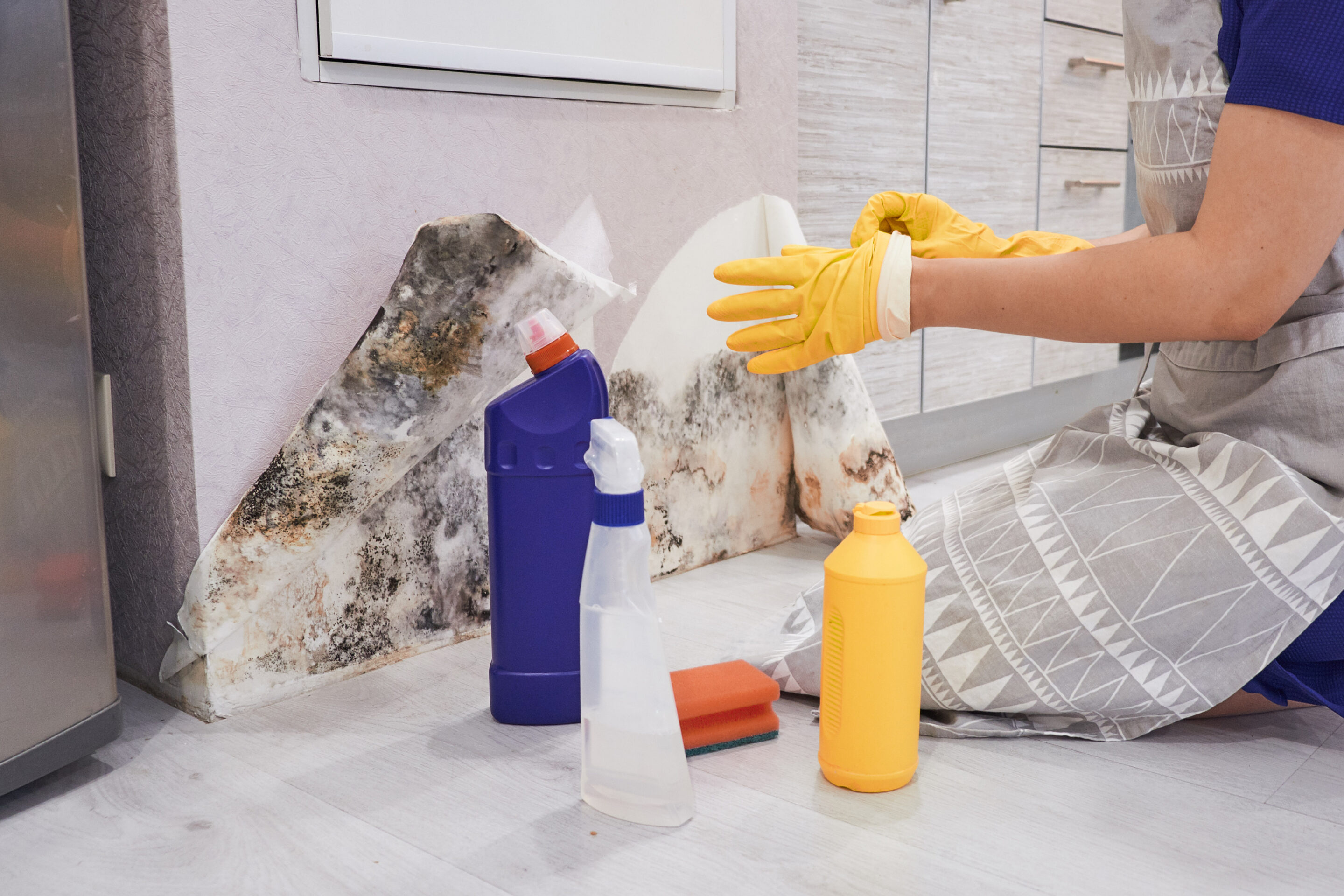
Insurers are more likely to pay if mold is described as a result of covered water damage—e.g., “A storm broke my roof, letting water in, causing mold.” This ties it to a peril like wind or pipe failure, bypassing exclusions. Avoid claiming “mold” alone—focus on the source. For a Longboat Key condo or Fruitville Road shop, document the initial leak with photos and repair receipts. The National Weather Service Tampa Bay Area offers storm data to link water entry to weather events (Source: NWS Tampa Bay).
Types of Mold and Signs to Watch For
Mold varies—black mold (Stachybotrys) thrives in wet drywall, common after Sarasota floods, while Aspergillus grows in humid attics near Venice. Signs include musty odors, dark spots on walls, or peeling paint in a Lakewood Ranch bathroom. Businesses near St. Armands Circle might spot mold under carpets post-storm. Early detection prevents claim denials for “neglect”—act fast when you see these clues.
Testing and Timeline for Mold Claims
Testing confirms mold type and scope—hire a certified inspector (search via Indoor Air Quality Association) to sample air or surfaces. Results strengthen claims, showing mold ties to a covered event. Florida allows three years to file property claims, but mold grows fast—report within days of discovery to avoid “delay” rejections (Source: Florida Statute 627.70132). Submit to your insurer with test results and water damage proof.
Here are the **10 critical things every Sarasota (or Florida) homeowner needs to know about mold remediation** after a flood like Helene or Milton. This is written from real post-2024 storm experience—buyer beware of scams and bad advice that exploded in the area.
1. **Not all “mold companies” are created equal – most are scammers in disaster zones**
After Helene/Milton, unlicensed “storm chasers” flooded Sarasota with magnetic signs on vans. Check:
– Florida license (MRSR or MRSR-####) at myfloridalicense.com
– IICRC-certified firm (not just one tech)
– Local references from 2024 jobs, not just Google reviews that appeared overnight.
2. **“Free mold inspection” = guaranteed “we found black mold” scam**
The inspector and remediator cannot legally be the same company in Florida (conflict of interest). If they offer a free test and then quote you $15,000–$40,000 the same day, run. Get a separate third-party hygienist or assessor (cost: $400–$800) to write the protocol.
3. **You do NOT need to tent the whole house or gut it to the studs in most cases**
Post-Helene social media panic led to people ripping out perfectly salvageable homes because someone said “it’s toxic black mold.” Stachybotrys is rare; most is Aspergillus or Cladosporium that can be remediated with proper containment and negative air.
4. **DIY is fine under 10 sq ft – over that you’re gambling with your health and resale value**
Florida statute and EPA say >10 contiguous square feet requires licensed remediation and clearance testing. DIY bigger jobs and you’ll fail a future home inspection or make your family sick.
5. **“We’ll just ozone it” or “fogging” is worthless and sometimes dangerous**
Ozone does NOT penetrate drywall or wood and can damage lungs/electronics. Same with most antimicrobial fogs. Real remediation = remove the contaminated material, not spray something and call it done.
6. **Clearance testing is NOT optional if you ever want to sell the house**
Banks and buyers now demand post-remediation verification (PRV) with air samples and a report from a licensed assessor. Skipping this can cost you $20k+ at closing later.
7. **Your insurance probably covers it – but only if you fight**
Most policies have limited mold coverage ($10k–$25k) but will pay full remediation if it’s a “covered peril” (e.g., storm surge from Helene). Document everything and get public adjuster help if denied—many Sarasota claims were initially rejected then paid 6 figures after appeal.
8. **Watch the “demo + rebuild” bait-and-switch**
Shady contractors rip out way more than needed, then demand cash up front for “reconstruction” and disappear. Get separate bids: remediation vs. rebuild. Never pay more than 30% up front.
9. **HEPA vacuums and negative air are non-negotiable**
If you don’t see full containment (plastic zip walls), critical barriers, and air scrubbers running 24/7 with exhaust out a window—walk away. Otherwise spores spread everywhere.
10. **Price red flags (Sarasota/Manatee 2024-2025 real numbers)**
– Under $2,500 for a whole-house job → too good to be true
– $8,000–$18,000 for average 3-bed flood house (2–4 ft waterline) → normal
– Over $35,000 without extensive structural damage → get 3 more quotes
**Quick checklist before signing anything**
– Separate assessor & remediator
– Written protocol from assessor first
– Itemized scope (sq ft of drywall, # of air scrubbers, etc.)
– Clearance test included in price
– Florida license & $1M+ liability insurance proof
– No “cash today discount” pressure
Coastal Mold and Hurricane Helene: Remediation Timeline and Why Time Matters
Coastal Sarasota faces heightened mold risks after major storms like Hurricane Helene, which brought devastating floods to Florida’s Gulf Coast. Along shorelines like Siesta Key or Lido Beach, storm surge and heavy rain soak homes and businesses, fostering rapid mold growth in drywall, wood, and fabrics. Black mold can emerge within 24-48 hours in these warm, damp conditions, as noted by the Environmental Protection Agency (EPA) in its mold cleanup guidelines. Time is critical—delays worsen structural damage and health risks.
Remediation must start fast: remove wet materials (e.g., drywall up to two feet above waterlines) and dry with fans within 48 hours, per the CDC’s mold prevention advice. Professional cleanup—costing $1,000-$5,000 for small areas, per industry standards—may take days to weeks, depending on damage scope. Sarasota County’s Emergency Management offers post-storm drying tips. File claims immediately—insurers may deny if mold spreads due to inaction.
Overview of Hurricane Helene’s Impact on Sarasota
Hurricane Helene, a Category 4 storm, made landfall near Perry, Florida, on September 26, 2024, as part of an extraordinarily active Atlantic hurricane season that also included Tropical Storm Debby and Hurricane Milton. While Helene’s core struck Florida’s Big Bend region, its expansive wind field and storm surge extended impacts southward to Sarasota County on Florida’s Gulf Coast. Sarasota experienced sustained winds of around 44 mph with gusts up to 64-74 mph, but the primary devastation came from a record-breaking storm surge of 4-8 feet above normal tide levels—the highest in decades for the area. This surge, combined with heavy rainfall exceeding 12 inches in northern Sarasota County, turned downtown Sarasota and Venice into “rivers,” flooding streets, homes, businesses, and infrastructure. The storm’s proximity (passing just offshore) amplified these effects, leading to widespread power outages affecting over 2 million customers regionally, including Sarasota.
The total economic toll from Helene and Milton combined exceeded $1.7 billion in Sarasota County alone, with Helene responsible for much of the initial flooding. Recovery efforts, supported by state and federal aid (including FEMA declarations for Sarasota), focused on debris removal, road repairs, and water quality restoration. As of late 2025, while major infrastructure has been rebuilt—such as State Road 789/Gulf Drive, cleared of sand and debris within weeks—some residents and businesses continue long-term recovery, highlighting vulnerabilities in coastal living.
Focus on Flood Damage
Flooding was Helene’s signature impact in Sarasota, driven by the storm’s massive size (nearly 500 miles wide) and a “dirty side” dynamic that funneled moisture and surge into the region. Key details include:
- Storm Surge and Inundation: Water levels peaked at 4-8 feet above dry ground, inundating low-lying areas like St. Armands Circle, Lido Key, Longboat Key, Harbor Drive, and Siesta Key. Streets became impassable “street rivers,” with inconsistent flooding—some neighborhoods saw feet of water while adjacent areas remained dry. Beachfront properties on Gulfside Road suffered the worst, with entire homes displaced and sand covering Gulf of Mexico Drive. Drone footage captured entire blocks underwater, with vehicles submerged and boardwalks destroyed.
- Rainfall and Inland Flooding: Northern Sarasota County received over a foot of rain, exacerbating river crests (e.g., Myakka River at 10.22 feet) and causing backups in creeks like Phillippi Creek, which couldn’t discharge into the elevated Sarasota Bay. This led to “salinity stratification” in the bay, harming seagrass beds and contributing to post-storm red tide outbreaks.
- Infrastructure and Economic Toll: Roads like SR 789 were washed out and buried in sand, requiring round-the-clock state crews for repairs. Businesses, such as The Giving Tree Gallery in downtown Sarasota, reported 4.5-5 feet of water inside, destroying inventory and forcing closures for up to two months. Hundreds of water rescues occurred, and the surge displaced families, with some coastal communities cut off entirely. Vibrio vulnificus (flesh-eating bacteria) cases surged in floodwaters across Sarasota and neighboring counties, leading to at least 13 deaths regionally.
Flooding’s long-term effects included contaminated wells (posing risks of disease-causing organisms) and ecosystem damage, with over 1 billion gallons of stormwater entering Sarasota Bay since 2013, worsening algal blooms.
| Area Affected | Flood Depth | Key Impacts |
|---|---|---|
| Downtown Sarasota & Venice | 4-8 ft surge | Streets flooded; businesses/merchandise ruined; power outages |
| St. Armands Circle & Lido Key | 3-5 ft | Boardwalks destroyed; homes displaced; sand/debris on roads |
| Harbor Drive & Siesta Key | Variable (up to 5 ft) | Inconsistent inundation; vehicles submerged; beach erosion |
| Northern Sarasota County | 12+ inches rain | River overflows; inland backups; well contamination |
Focus on Mold Damage
Floodwaters from Helene introduced moisture that accelerated mold growth, turning a short-term flood issue into a persistent health and structural hazard. Porous materials like drywall absorbed contaminated water, fostering black mold (Stachybotrys) and other fungi within 24-48 hours.
- Extent and Health Risks: Any area touched by floodwater required immediate drywall removal up to 2 feet above the waterline to prevent mold penetration. Sarasota’s humid climate worsened proliferation, with reports of widespread mold in flooded homes and businesses. Vulnerable groups—those with asthma, allergies, or compromised immune systems—faced heightened risks of respiratory issues, allergic reactions, and infections. Post-Helene, mold contributed to a “hidden health crisis,” with experts noting it can damage materials long-term and trigger chronic conditions.
- Cleanup Challenges: Items wet by floodwater that couldn’t dry fully within 48 hours needed discarding to avoid ongoing contamination. The EPA emphasized professional intervention for severe cases, with Sarasota County providing guides for safe removal. However, rapid action was critical; delays led to structural weakening and costly remediation. In 2025 reflections, officials noted that unaddressed mold prolonged recovery for some households.
| Mold Prevention/Cleanup Step | Action | Rationale |
|---|---|---|
| Immediate Assessment | Remove standing water; inspect for moisture | Stops growth at source; prevents hidden spread |
| Material Removal | Cut drywall 2 ft above waterline; discard porous items | Floodwater is contaminated; drying alone insufficient |
| Protection | Wear N95 mask, gloves, goggles | Shields against spores and irritants |
| Drying & Ventilation | Use dehumidifiers/fans; avoid HVAC until dry | Reduces humidity below 60% to inhibit growth |
| Professional Help | For >10 sq ft or health vulnerabilities | Ensures thorough remediation; avoids DIY risks |
Lessons Learned
Nearly a year after Helene (as of September 2025), Sarasota County officials conducted an “after-action report,” implementing over two dozen changes to emergency protocols. These, drawn from resident experiences and expert analyses, emphasize proactive preparation over reaction. Key takeaways:
- Individual Preparedness: Stock 2-4 weeks of non-perishables, water, and pet supplies monthly; rotate stock to avoid waste. Know your evacuation zone (via alertsarasotacounty.com) and have flood insurance—standard homeowner policies exclude it. Plan contingencies for separated family members, including offline communication (e.g., HAM radios, Starlink). Beachfront living amplifies risks; even offshore storms can surge inland 100+ miles.
- Community and Response Improvements: Sarasota expanded shelter capacity, hired more emergency staff, and accelerated debris management (e.g., faster road clearances via FDOT). Build neighbor networks for mutual aid—share resources like generators (keep 20 ft from homes) and security (dogs as early warning). Post-storm, avoid sightseeing to free roads for crews; use cash during outages.
- Health and Environmental Insights: Treat floodwater as hazardous—boil or test well water; monitor for vibrio in brackish areas. Prioritize mold mitigation to avert long-term health crises; EPA resources guide safe cleanup. Climate trends suggest increasing frequency—Sarasota saw two “1,000-year” floods in recent years—urging resilient infrastructure like better drainage.
- Broader Recovery Hacks: From onsite responders: No immediate rescues expected—self-reliance is key. For flooded vehicles, disconnect batteries before starting. State aid (e.g., DUA applications via FloridaCommerce) and volunteer programs sped rebuilding, but patience is essential amid widespread damage.
These lessons underscore Sarasota’s resilience, transforming Helene’s scars into stronger defenses for future storms. For ongoing resources, visit floridadisaster.org or contact local emergency management.
Frequently Asked Questions About Mold Claims
Is mold covered if I didn’t know about the leak?
Yes, if it’s from a sudden, covered event—not long-term neglect (Source: FLOIR FAQs).
How much does testing cost?
Expect $300-$500, depending on property size—worth it for claim support (Source: IAQA Resources).
What if my claim is denied?
Appeal with evidence via the DFS Complaint Portal—it mediates thousands of disputes (Source: DFS Consumer Guide).
Mold Myths vs. Facts
Myth: “All mold is covered by insurance.” Fact: Only mold from covered water damage qualifies—check exclusions (Source: FLOIR Basics).
Myth: “Mold isn’t a big deal.” Fact: It can damage property and health, especially in Sarasota’s humidity (Source: CDC Mold Facts).
Fact: Bleach doesn’t kill all mold—professional remediation is often needed for claims (Source: EPA Mold Guide).
Air Quality and Illness: Mold’s Hidden Impact
Mold affects indoor air quality, a concern in Sarasota’s sealed homes and businesses. Spores trigger allergies, asthma, or respiratory issues—black mold is notorious for this. The CDC links prolonged exposure to health risks, making swift removal critical. Test air quality post-mold discovery—results can pressure insurers to act if tied to a covered event. For cleanup, Sarasota County Environmental Health offers safety tips.
Recovering from Mold in Sarasota
Mold claims test Sarasota property owners, from Myakka River homes to Main Street offices. Frame them as water damage, know your policy’s exclusions and deductibles, and use testing to build your case. Resources like FLOIR, DFS, and the CDC guide you through recovery can help. All content on SARASOTA LAW is provided to help you find good, local resources and information. Info is provided for general informational purposes only and should not be considered legal, financial, medical, or professional advice.